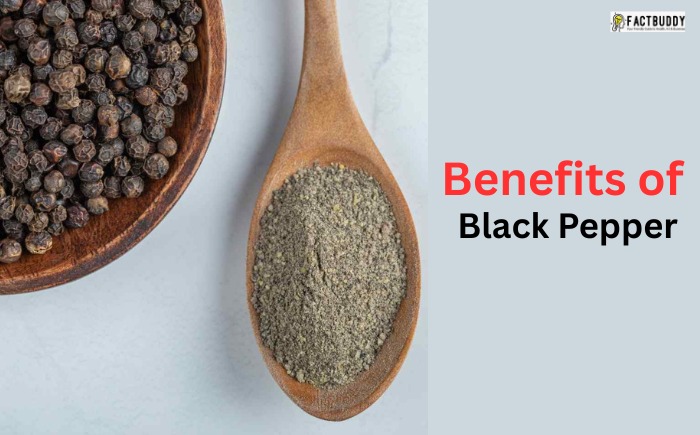
Benefits of Black Pepper
Black pepper is not only used for cooking but also provides several health benefits. People often call it the ‘King of Spices’. Its main active compound, piperine, aids digestion, boosts nutrient absorption, and offers anti-inflammatory and antioxidant effects.Furthermore, it may control blood sugar levels, support brain function, reduce cholesterol, relieve pain, aid in weight loss, prevent bloating, and stimulate digestive juices. Its antioxidant profile also protects cells from damage.
Benefits of Black Pepper
Supports Gut Health
Black pepper contains prebiotic properties that encourage the growth of healthy gut bacteria.
Stimulates Digestive Juices
It plays a key role in digesting food, especially protein, and increases hydrochloric acid production in the stomach.
Enhances Nutrient Absorption
Moreover, black pepper improves nutrient absorption, helps break down fats and carbohydrates, and relieves gas through its carminative properties.
Anti-Inflammatory Effects
Its anti-inflammatory compounds lower oxidative stress, protect the liver, and help relieve pain.
Fights Free Radicals
Importantly, piperine and other antioxidants in black pepper protect cells from damage caused by free radicals.
Liver and Bone Health
It supports liver detoxification and provides minerals that strengthen bones.
Pain Relief
Importantly, piperine and other antioxidants in black pepper protect cells from damage caused by free radicals
Benefits of Black Pepper for Skin
Additionally, its antibacterial and antioxidant properties keep the skin healthy, reduce blemishes, and may improve conditions like vitiligo.
Brain Function
Moreover, piperine supports brain health by improving memory and protecting nerves.
Controls Blood Sugar Levels
tudies show that black pepper helps regulate blood sugar levels.
Medicinal Uses of Black Pepper
- Reduces wrinkles and dark spots. It also supports treatment for skin conditions such as vitiligo.
- Adds a unique flavor to food while providing health benefits.
- Essential oil or poultices made from black pepper can ease pain when applied topically, and inhaling it helps relieve congestion.
Recommended Daily Intake
Side Effects of Black Pepper
Although black pepper provides many benefits, too much can cause side effects:
- Excess intake overstimulates gastric acid, leading to heartburn. People with ulcers or gastritis should avoid it.
- Overuse may cause stomach burning, bloating, indigestion, or nausea.
- Inhaling large amounts can block breathing and may create a medical emergency.
- Ground pepper irritates the eyes and causes a burning sensation.
- Some people experience allergies like diarrhea, stomach pain, watery eyes, or nausea.
- Piperine slows blood clotting, which increases risk for those with bleeding disorders or on anticoagulant medicines.
- Large amounts during pregnancy may cause discomfort.
- Black pepper interacts with several medicines, including heart drugs, lithium, and liver-metabolized medications.
- People recovering from surgery or with bleeding issues should consult a doctor before consuming it.
With its many medicinal uses of black pepper, plus its benefits for digestion, skin, and brain health, this spice truly deserves the title “King of Spices.” Still, moderation remains essential because the side effects of black pepper may occur when you consume it in excess.