Health Benefits Of Curry Leaves
Curry leaves are used in Indian cuisine to enhance flavor and aroma. Moreover, known as a popular aromatic ingredient, the small green leaves of the curry plant (Murraya koenigii) add a fresh, citrus-like taste that enriches the flavor of dishes. Besides their culinary use, the Curry Leaves Benefits include improving digestion, boosting hair health, and supporting overall wellness. Curry leaves are especially popular in South Indian cooking, used in curries, rice, chutneys, and soups. Typically, they are sautéed in hot oil to release their flavor and aroma fully.
Curry leaves are not just for taste—they are highly nutritious. Additionally, they are packed with vitamins, minerals, and antioxidants, which aid digestion, regulate blood sugar, improve hair and skin health, and reduce inflammation. Furthermore, regular use may help lower the risk of heart disease, enhance vision, and boost immunity. Thus, curry leaves enrich both cuisine and health naturally.
Curry Leaves Nutrition
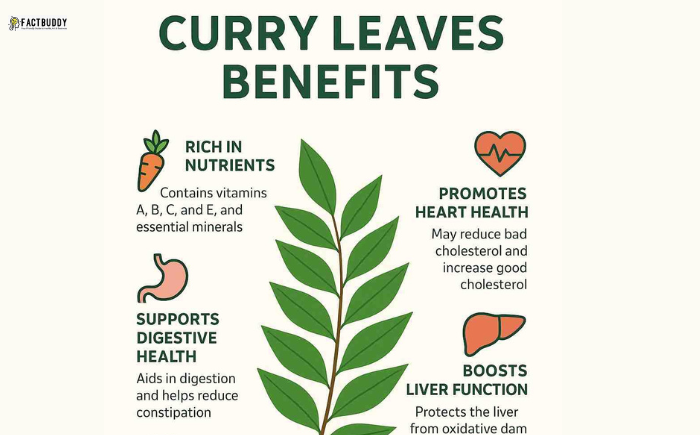
Curry leaves are rich in antioxidants, vitamins (A, B, C), and minerals such as calcium, phosphorus, and iron. These nutrients aid digestion, reduce inflammation, and support healthy hair and skin.Moreover, regular consumption helps regulate blood sugar, reduce cholesterol, lower heart disease risk, and strengthen immunity.
Approximate Nutrition per 100g
- Calories: 66 kcal
- Carbohydrates: 14 g
- Protein: 6 g
- Fat: 1 g
- Dietary Fiber: 6 g
- Calcium: 830 mg
- Iron: 15 mg
- Vitamin C: 240 mg
- Vitamin A: 6186 IU
Due to this rich nutritional profile, curry leaves can easily be incorporated into everyday meals, offering both taste and health benefits.
12 Amazing Curry Leaves Benefits
1.Keeps Skin Radiant and Nourished
Curry leaves contain vitamin E and antioxidants that deeply nourish the skin, reduce acne, and help fade dark spots. Curry leaves benefits for skin are well recognized in traditional medicine.
2.Protects the Liver
Antioxidants in curry leaves safeguard liver cells from toxins and help maintain liver health.
3. Reduces Inflammation and Pain
Natural compounds in curry leaves reduce inflammation and relieve pain while helping fight infections.
4. Supports Eye Health
Furthermore, vitamin A in curry leaves improves vision, prevents night blindness, and keeps eyes healthy.
5. Aids in Weight Management
Furthermore, curry leaves improve digestion, boost metabolism, and reduce fat accumulation, supporting weight control.
6. Nourishes and Strengthens Hair
Curry leaves strengthen hair roots, reduce hair fall, and delay premature graying. When used with coconut oil, hair becomes thicker and shinier. Furthermore, curry leaves benefits for hair are widely known.
7. Supports Heart Health
Additionally, compounds like rutin and tannins help reduce bad cholesterol and increase good cholesterol, lowering heart disease risk.
8. Regulates Blood Sugar
Moreover, natural compounds enhance insulin activity, helping maintain stable blood glucose levels.
9. Improves Digestion
Furthermore, curry leaves reduce bloating, gas, and indigestion, helping the body absorb nutrients efficiently.
10. Rich in Antioxidants
Additionally, vitamins and flavonoids in curry leaves neutralize free radicals, supporting cellular health.
11. Supports Brain and Nervous System
Additionally, curry leaves protect brain cells, enhance memory, and reduce stress and anxiety.
12. Strengthens Bones and Muscles
Moreover, calcium, magnesium, and phosphorus in curry leaves help maintain strong bones and healthy muscles.
How to Consume and Use Curry Leaves
Moreover, curry leaves are versatile and can be used in various ways:
How to Use Curry Leaves
- Fresh Leaves in Cooking: Add curry leaves to lentils, vegetables, rice, or chutneys. Afterward, lightly sauté in oil to enhance flavor.
- Curry Leaves Tea: Boil 8–10 fresh leaves in a cup of water for 5 minutes. Furthermore, drinking on an empty stomach in the morning aids digestion and detoxification.
- Curry Leaves Juice: Blend 10–12 leaves with a little water and strain the juice. Additionally, consume one teaspoon daily to support liver health and maintain stable blood sugar levels.
- Curry Leaves Powder: Dry the leaves, grind them into powder, and sprinkle on salads, soups, or rice to boost nutrition. In addition, curry leaves powder and curry leaves powder uses are popular for daily consumption.
- Hair Oil: Boil curry leaves in coconut oil and let it cool. Afterward, apply 2–3 times a week to strengthen hair and prevent premature graying.
Simple Curry Leaves Recipes
1. Curry Leaves Chutney
- Ingredients: 1 cup curry leaves, 2 dried red chilies, ½ cup coconut, 2 garlic cloves, oil, salt.
- Method: Sauté ingredients lightly and blend into a paste. Serve with rice or dosa.
2. Curry Leaves Rice
- Ingredients: 2 cups cooked rice, 20 curry leaves, ½ tsp mustard seeds, 2 dried chilies, salt, ghee.
- Method: Sauté mustard seeds, chilies, and curry leaves in ghee. Mix with rice and stir for 2 minutes.
3. Curry Leaves Powder
- Ingredients: Dried curry leaves, roasted lentils, red chili, black pepper, salt.
- Method: Afterward, grind all ingredients into powder and store in an airtight jar. Serve with rice, idli, or dosa.
Tips:
- Use 3–5 leaves daily for both flavor and health.
- Fresh leaves have stronger taste and aroma.
Curry Leaves Side Effects and Precautions
Curry leaves are generally safe, but some precautions are necessary:
- Avoid excessive consumption: Overeating may cause bloating, mild diarrhea, or indigestion.
- Allergy precautions: People allergic to herbs or plant products should consult a doctor first.
- Pregnant and breastfeeding women: Avoid excessive or concentrated use without medical advice. Generally, small amounts of fresh leaves are usually safe.
- Raw leaves: Chewing 3–4 fresh leaves on an empty stomach in the morning is beneficial for digestion and liver health.
- Nutritional considerations: Fresh leaves have more vitamins and aroma than dried ones.
- Moderate daily use: Small, regular portions are safe and beneficial.
How to Store Curry Leaves
- Refrigerator: Wash, dry, wrap in tissue, and store in an airtight container for 10–12 days.
- Freezer: Coat lightly with oil, store in a bag, and freeze. Use as needed in cooking.
- Dried Leaves: Sun-dry or shade-dry, grind into powder, and store in a glass jar for 3–4 months.
Conclusion:
Though small, curry leaves are a highly beneficial herb. In addition, they enhance flavor and aroma, aid digestion, and promote hair and skin health. Traditionally used in Ayurveda for centuries, they can also be consumed fresh or dried. Additionally, with proper storage, they stay fresh for a long time.Adding a small amount to your daily diet lets you enjoy both taste and health benefits.