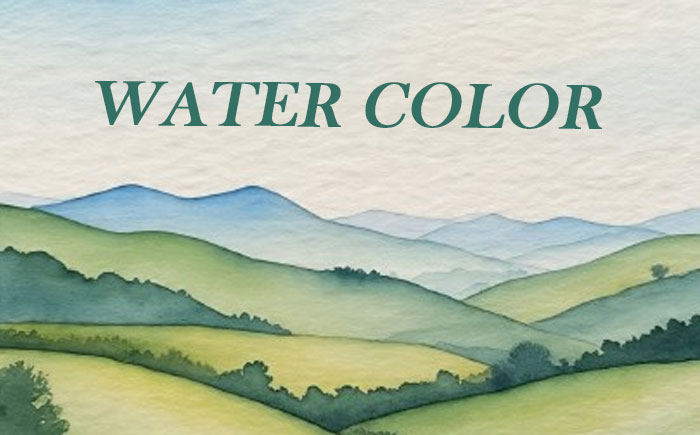
Indeed the origin of watercolour painting is a fascinating journey that blends history, culture, and artistic evolution. Dating back thousands of years, this delicate yet expressive medium has been used to capture nature, daily life, and imagination. From ancient cave art to the refined works of the Renaissance, watercolour’s story is rich and diverse. So different civilizations embraced watercolour for its versatility and luminous quality, making it a favorite among explorers, botanists and artists alike. Moreover, its ability to create transparent layers and vibrant tones set it apart from other painting techniques. Today, learning about the origins of watercolour not only deepens appreciation for the art form but also connects us to centuries of creativity and innovation. In this guide, we’ll explore how watercolour painting began, evolved, and continues to inspire artists around the world.
Indeed, India’s artistic tradition spans thousands of years, bearing witness to a rich and diverse cultural heritage. Moreover, across ages indian artists have expressed their thoughts, emotions and traditions through various artistic mediums. So among these one of the most captivating and expressive forms is the origin of watercolour painting and seasoned artists alike. With its transparent hues, softness and vibrant color blends, this medium captures the soul of Indian culture. Moreover, through watercolor painting, Indian artists do not merely depict scenes—they create canvases filled with emotion, tradition, and the evolving narrative of society.
Watercolor painting is a type of art where colors are made by mixing pigments with water. So a typical watercolor mixture contains arabic gum and glycerin—gum binds the color while glycerin keeps it fluid and usable. So these colors are usually applied in light layers on watercolor paper, allowing the image to maintain a luminous and transparent quality. Moreover, the soft and delicate effect of watercolors makes it ideal for expressing the subtle beauty and emotion in Indian art. So paintings created with this method easily leave a lasting impression on viewers.
Watercolor is mainly of two types
1. Transparent
2. Opaque
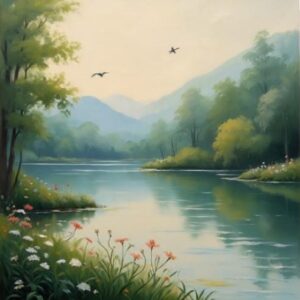
Tempera: Made by mixing with egg yolk or glue. Dries quickly, durabl.
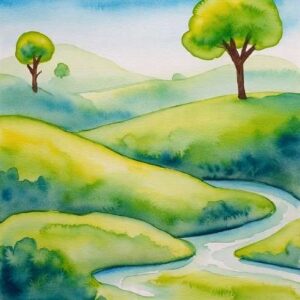
Gouache: Made by adding white or opaque pigments, gives a thick and bright color.
Tube: Dense color, easy to mix.
Pan: Solid color in a small box, portable.
Pencil / Marker: Can be blended with water to create watercolor effect.
Indeed artists choose different types of watercolors according to their work style and preference. So some look for subtlety in transparent colors, while others prefer depth and coverage in opaque ones.
Indeed, the history of watercolor painting in India is ancient and profound. In earlier times, it was extensively used for illustrating religious stories, decorating manuscripts, and documenting flora and fauna. So artists painted mythological scenes, deities and elements of nature with incredible finesse using natural pigments and water. Morover, during the Mughal era, miniature paintings became a vital part of Indian art. So using watercolor techniques, artists depicted kings, queens, court scenes, and mythology with exceptional detail. Later, under British colonial rule, European watercolor painting ideas and techniques were introduced in India. So Indian artists combined these with indigenous styles, creating a new and distinct Indian watercolor style. This fusion enriched Indian art, blending tradition with modernity.
The beauty of watercolor painting lies in its transparency and subtlety, which instantly connects with the viewer. So it elegantly expresses Indian culture, folklore, spirituality and the natural world. Moreover, Indian artists use watercolor to depict gods and goddesses, festivals, village scenes and historical figures in a way that offers a truly immersive experience. Even with a simple presentation, watercolor can convey deep meaning—making it a significant and popular medium in Indian visual arts.
Several legendary Indian artists have made remarkable contributions to watercolor painting:
Indian artists explore a wide range of themes, reflecting cultural depth, nature, and daily life:
Through these themes, Indian watercolor artists not only paint visuals but also evoke emotions, convey culture, and preserve history.
Begin with easy subjects like flowers, trees, or landscapes. It helps build comfort and boosts confidence.
Consistency is key. So you don’t need to paint daily, but regular practice will help you improve.
Explore different watercolor painting ideas like wet-on-wet, wet-on-dry, wash layers, and more.
Explore watercolor painting for beginners YouTube channels like:
Watercolor by Shibasaki – A charming Japanese artist known for his gentle teaching style.
The Mind of Watercolor – Moreover, great for learners from beginner to advanced levels.
Skillshare – Offers a wide range of watercolor courses (first month free trial).
Domestika – Moreoover, Professional-level courses from renowned artists.
Udemy – Then step-by-step video tutorials for all skill levels.
Study the work of experienced watercolor artists. Learn how they manage color, light and layering.
Light and shadow bring realism and depth to a painting—key to making your art come alive.
Never rush into the next layer. Allow each one to dry fully to avoid muddying your artwork.
If you’re just starting out, exploring Origin of Watercolour painting can unlock a fulfilling creative journey.
Indeed, Indian watercolor painting is not just an artistic technique—it’s a vivid reflection of India’s culture, emotions, and legacy. From ancient cave paintings to the refined modern canvas, so this journey continues to unfold a colorful narrative Moreover, every brushstroke tells a story—a memory, a sentiment, or a piece of cultural identity. That’s why Indian watercolor painting is not only pleasing to the eyes but also opens a window to our rich and imaginative heritage.
Indeed the vast universe of Indian art, watercolor painting stands out as a radiant and expressive medium. So through its clarity, vibrant colors, and intricate details, it beautifully mirrors the spirit of Indian life and tradition.
Aliqu justo et labore at eirmod justo sea erat diam dolor diam vero kasd