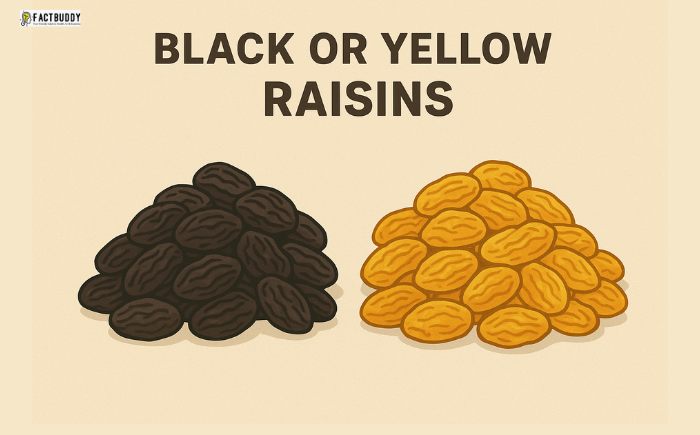
Black or Yellow Raisins?
Black or Yellow Raisins!
Raisins, a familiar ingredient in the kitchen, are no longer limited to dishes like pulao or payesh. Many people now consume soaked raisins every morning, and some even eat them on an empty stomach for an energy boost. But when it comes to Black or Yellow Raisins, not all offer the same benefits. The difference between commercially available golden raisins and black raisins is significant. If eaten regularly, one type may support your health while the other may trigger discomfort. Therefore, it is important to know which one is suitable for your body.
Golden Raisins
Golden raisins look attractive, but their color is not natural. To increase shelf life and improve appearance, sulfur dioxide, a chemical preservative, is commonly used. This additive can cause reactions in some individuals, especially those with asthma, acidity, gas, or digestive issues.
Although golden raisins contain a good amount of potassium that helps maintain the body’s electrolyte balance, the added chemicals make them unsuitable for daily consumption. Long-term, excessive intake of sulfur-treated raisins may put pressure on the liver, disturb natural hormonal activity, and even lead to bloating or indigestion.
Golden raisins are not harmful for everyone, but people with sensitive digestion should be cautious.
Black Raisins
Many people call black raisins “natural raisins” because they are usually dried in sunlight without the use of chemical preservatives. For this reason, health-conscious individuals prefer them more.
Black raisins contain a high amount of iron, which helps increase hemoglobin levels. They are especially beneficial for individuals suffering from anemia, women with irregular periods, PMS, or PCOS.
They also contain:
-
B-complex vitamins — help the body produce energy
-
Antioxidants and polyphenols — reduce inflammation and support healthy blood circulation
-
Prebiotic fiber — nourishes good gut bacteria and improves digestion
-
Compounds that support natural estrogen balance — keep skin and hair healthier
Overall, black raisins are gentler on the body and easier to include in daily routines.
Which One Should You Choose?
Both types of raisins are nutritious, but for regular consumption, black raisins are generally safer and better tolerated.
- Individuals struggling with acidity, asthma, allergies, bloating, or liver-related issues should limit their intake of golden raisins.
- To boost energy, reduce iron deficiency, and maintain hormonal balance, black raisins are a more suitable choice.
However, excessive consumption of any food can create problems. It is best not to eat more than 8–10 raisins a day. People with diabetes should consult their doctor before adding raisins to their diet.