Chickpeas vs Green Peas
Chickpeas vs Green Peas
In most Indian households, chickpeas and green peas are staple foods. They often appear in delicious dishes such as kachori, snacks, and curries. While chickpeas are available throughout the year, green peas mainly arrive in the winter season, adding a touch of freshness to seasonal recipes.
Both chickpeas and green peas are popular legumes used across different cuisines worldwide. However, several factors set them apart in terms of nutrition, texture, and flavor.
Which Is More Nutritious?
Both chickpeas and green peas are packed with nutrients, but their profiles vary depending on dietary goals and health needs. Although both are highly nutritious, each offers unique benefits.
Chickpeas
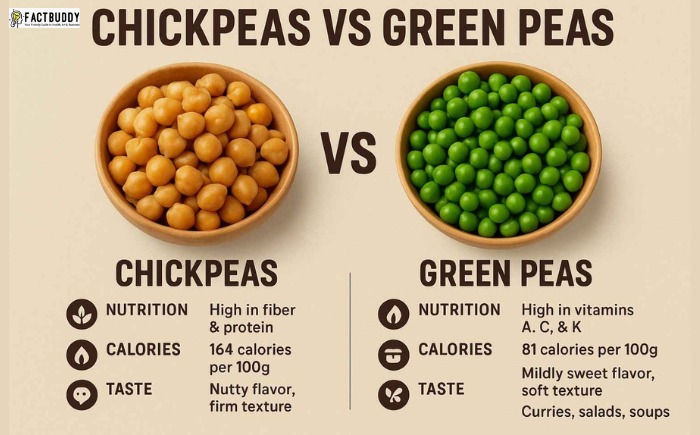
Chickpeas are rich in fiber and protein — almost double the protein content of green peas. This makes them an excellent choice for building, repairing, and maintaining body tissues.
Their high fiber content supports gut health, regulates blood sugar levels, and promotes satiety, helping with weight management.
In addition to fiber and protein, chickpeas contain essential minerals such as calcium and iron.
- Iron helps the body form red blood cells and prevents anemia.
- Calcium strengthens bones and supports muscle function.
Chickpeas also provide vitamin B5 (pantothenic acid), which converts food into energy and helps reduce fatigue.
Green Peas
Green peas are lower in calories — around 81 calories per 100 grams, compared to chickpeas’ 164 calories per 100 grams. Despite being lighter, they still offer a good amount of fiber and protein for healthy digestion and muscle maintenance.
What makes green peas special is their abundance of vitamins A, C, and K.
- Vitamin C acts as a powerful antioxidant that protects cells, enhances iron absorption, and boosts immunity.
- Vitamin A supports good vision and immune function.
- Vitamin K helps with blood clotting and bone health.
Thanks to their mildly sweet flavor and soft texture, green peas work wonderfully in vegetable curries, salads, soups, and side dishes.
Which Has More ,?
Although many assume chickpeas are low in fat, they actually contain more fat than green peas. However, these are healthy unsaturated fats that help maintain good cholesterol levels and add nutrient density.
Taste and texture comparison:
- Green peas taste mildly sweet and have a soft texture, perfect for light and refreshing dishes.
- Chickpeas have a nutty flavor and firm texture, making them ideal for hearty curries and roasted snacks.
Which Is Better?
Both chickpeas and green peas are nutritious, but they serve different purposes.
Green peas shine with their high vitamin content and low-calorie count — perfect for boosting immunity and providing antioxidants.
Chickpeas excel with their rich fiber, minerals, and protein — ideal for maintaining energy, supporting bones, and improving blood health.
When combined, they offer a balanced nutritional mix: green peas provide quick nourishment, while chickpeas ensure lasting fullness. Adding both to your diet increases meal variety and delivers a steady supply of essential nutrients for overall wellness.
Final Thoughts
When it comes to green peas vs chickpeas, there’s no single winner — the choice depends on your nutritional goals.
Choose chickpeas for higher protein and mineral content.
Choose green peas for vitamins, antioxidants, and a lighter meal option.
By including both, you can enjoy the best of both worlds — flavor, texture, and complete nutrition for a balanced and healthy lifestyle.