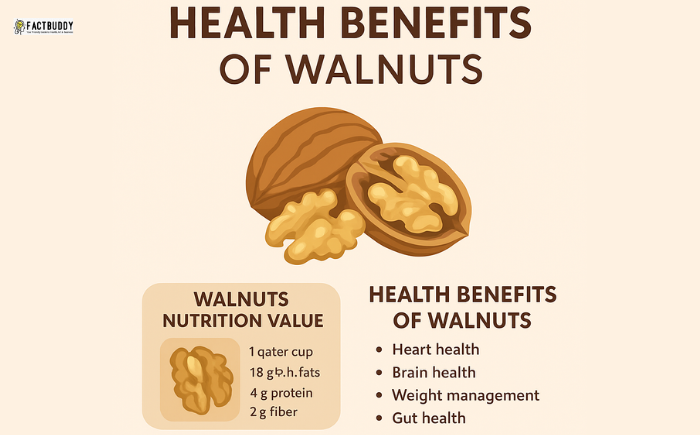
Health Benefits of Walnuts
Health Benefits of Walnuts are widely recognized because walnuts are not only delicious but also incredibly nutritious. Many people think that healthy food means making sacrifices—cutting down sweets, avoiding fats, or skipping favorite snacks. But walnuts are an excellent example of a food that supports health without compromising taste. Studies have shown that regular consumption of walnuts reduces the risk of heart disease, helps control blood pressure, and maintains healthy cholesterol levels. They boost brain function, preserve memory during aging, and support gut and reproductive health. Walnuts can easily be included as snacks, in salads, cooked vegetables, or with whole grains.
English walnuts are the most widely sold and are also known as Persian walnuts. They originated in Persia and later spread across Asia and Europe. For over ten thousand years, walnuts have held a special place in the human diet. Remarkably, ancient Romans considered walnuts important for detoxification and skin health.
Walnuts Nutrition Value
About a quarter cup, or roughly 14 halves of walnuts, contains approximately 18 grams of healthy fats, 4 grams of protein, and 2 grams of fiber. Walnuts are rich in manganese, which strengthens bones, aids collagen production, and supports faster wound healing. They also provide magnesium, potassium, iron, calcium, sodium, and essential B vitamins. Trace minerals like zinc, copper, boron, molybdenum, nickel, and cobalt are present, which are vital for various bodily functions.
Most notably, walnuts contain polyphenols, especially pedunculagin, a potent antioxidant and anti-inflammatory compound. Moreover, these compounds help prevent heart disease, cancer, and neurological problems.Black walnuts also offer similar health benefits as English walnuts.
Health Benefits of Walnuts
Heart Health
Walnuts help lower bad cholesterol (LDL) and triglycerides. Their omega-3 fatty acids and anti-inflammatory compounds maintain blood vessel health, prevent blood clots, and reduce the risk of heart disease.
Brain Health
The omega-3 fatty acids and antioxidants in walnuts enhance brain function. They improve memory, attention, and mental processing speed. Polyphenols reduce inflammation and oxidative stress in the brain, promote the creation of new cells, and improve neural communication. Studies show that the protein, fiber, minerals, and healthy fats in walnuts collectively boost brain power and cognitive performance. Regular walnut consumption slows age-related mental decline and reduces the risk of Alzheimer’s and other neurological disorders.
Weight Management
Walnuts are not only nutritious but also help in weight control. Their protein, fiber, and healthy fats keep you full for longer, reducing the need for frequent snacking and controlling extra calorie intake. Studies show that walnuts decrease hunger and increase satiety. They even help the brain resist cravings for tempting foods like cakes, chips, or fast food. Despite being high in calories, walnuts provide sustained energy and curb sweet cravings. Eating a small amount daily can help maintain weight and prevent overeating.
Gut Health & Blood Pressure Control
Walnuts naturally act as a prebiotic, promoting beneficial gut bacteria and aiding digestion. Their fiber content helps regulate blood sugar levels, reducing the risk of diabetes. Studies indicate that regular walnut consumption may also lower blood pressure slightly. Incorporating walnuts into your diet improves blood vessel health and lowers long-term heart disease risk.
Skin Care
Healthy fats in walnuts naturally moisturize the skin and reduce inflammation. Omega-3 and omega-6 fatty acids keep skin soft and healthy. Antioxidants, particularly vitamin E, minimize signs of aging and maintain a bright, fresh complexion. Regular walnut consumption helps reduce pore size, protects the skin from sun and environmental damage, and preserves natural skin vitality. Additionally, melatonin in walnuts improves sleep quality, aiding skin and body regeneration.
Children’s Health
Walnuts support brain development and memory in children. Omega-3 fatty acids play a crucial role in proper brain development. Additionally, walnuts strengthen immunity, provide energy, and support heart and eye health. When giving walnuts to children, start gradually in small amounts to avoid allergies.
Hair Health
Walnuts help reduce hair fall and promote hair growth. Omega-3 fatty acids, biotin, and antioxidants strengthen hair roots, reduce dandruff, and enhance natural shine. Moreover, protein and zinc improve hair density and structure, making hair appear thick, healthy, and strong.
Cancer Prevention
Antioxidants and anti-inflammatory compounds in walnuts help slow cancer cell growth.Moreover, studies show that walnut consumption affects over 450 genes associated with breast cancer, reducing cancer cell proliferation and improving survival rates. Black walnuts also contain similar anti-tumor compounds.
Male Health & Reproductive Benefits
Regular walnut consumption enhances male libido and orgasmic function. Omega-3 fatty acids, antioxidants, and essential vitamins improve sperm motility, count, and structure.Moreover, daily walnuts help maintain stable testosterone levels, which are crucial for male reproductive health. Additionally, they support cardiovascular health and energy levels, enhancing overall physical performance.
Walnuts Uses
Walnuts are versatile and can be used in both sweet and savory dishes. They can be eaten alone or added to yogurt, salads, oats, smoothies, granola, cakes, and ice cream toppings. For heart health, raw or dry-roasted walnuts are best, avoiding oil-roasted versions. Black walnuts can be used as an alternative, though they have a slightly stronger taste.
Some popular ways to use walnuts:
- Sprinkle on salads
- Mix into pasta or pesto
- Add to muesli with oats, fruits, and seeds
- Include in muffins, bread, or cakes
- Make homemade granola bars
- Combine with dried fruits, chocolate chips, or other nuts for trail mix
- Blend into smoothies or oatmeal
- Dip in dark chocolate
- Add to vegetables, tacos, or stir-fries
- Use in energy balls or protein snacks
- Mix into soups, yogurt, oatmeal, or fruit bowls
- Crush over chicken or fish as a coating
- Mix walnut oil into salad dressings or vinaigrettes
Before using in cooking, ensure no one consuming it has a nut allergy.
Precautions When Eating Walnuts
While walnuts are healthy, some precautions are necessary:
- Allergy Risk: People with nut allergies may experience reactions ranging from mild itching, hives, or rashes to severe anaphylaxis.
- High Calories: Walnuts contain ~65% fat, so those on low-calorie diets should be cautious. One handful adds roughly 10% of daily calories. Excessive intake may lead to weight gain.
- Drug Interactions: Walnuts may interact with certain thyroid medications or blood thinners. Consult a doctor before regular consumption.
- Digestive Issues: Eating many walnuts at once can cause gas, bloating, or digestive discomfort. Start with small amounts.
- For Children: Small children may choke on whole walnuts. Using walnut powder or small pieces is safer.
In short, walnuts are beneficial for health, but should be eaten in moderation and according to your personal health and medications.
How to Store Walnuts
Due to high oil content, walnuts can spoil quickly. Store them in a cool, dry place in an airtight container:
- In the fridge: up to 3 months
- In the freezer: up to 1 year
- Keep away from strong-smelling foods as walnuts can absorb odors
- Discard if soft, shriveled, or rancid
Proper storage keeps walnuts fresh, crisp, and nutritious.
How Many Walnuts to Eat Per Day
One handful (about 14 halves) daily provides essential omega-3 fatty acids without adding excessive calories. In fact, for brain health and improved focus, 30–60 grams per day is recommended. Therefore, avoid overeating to prevent added calories and weight gain.
Conclusion:
Walnuts are an exceptional nutrient-dense nut. Compared to other nuts, they are higher in antioxidants and omega-3 fatty acids, keeping the body strong and healthy. Health Benefits of Walnuts include reducing inflammation, lowering heart disease risk, and supporting healthy gut bacteria. Although research on walnut fiber and polyphenols is ongoing, current evidence strongly supports including walnuts in your daily diet.