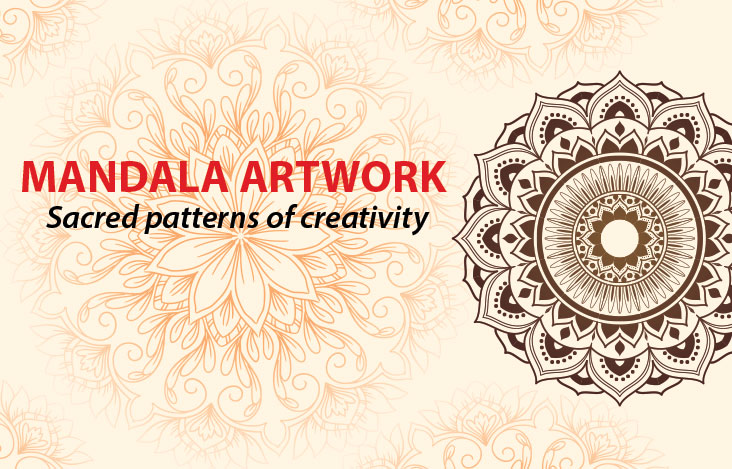
Mandala artwork meaning and benefits go beyond its mesmerizing circular patterns — it symbolizes unity, inner peace, and deep spiritual healing, along with its symmetrical designs. So the word mandala originates from the ancient Sanskrit language, meaning “circle,” symbolizing unity, completeness, and the infinite nature of the universe.
More than just beautiful patterns, mandalas hold deep spiritual, cultural, and psychological significance. In addition, from Hinduism, Buddhism, Jainism, to Native American traditions, Many cultures use mandalas for meditation, healing, and cosmic symbolism. For example, in India, especially in Rajasthan, Artists have developed mandala art into a colorful, detailed, and sacred tradition.
Understanding the mandala artwork meaning and benefits helps us appreciate its powerful impact on emotional healing, so mindfulness, and cultural history, highlighting its timeless value across different traditions and practices.
Indeed, across Hindu and Buddhist traditions, mandalas serve as tools for meditation and spiritual development. So they help individuals focus, reflect, and achieve deeper states of awareness through their intricate designs.
In Tibetan Buddhism, monks create detailed Tibetan mandala art with colored sand—known as sand mandala art—which takes days or even weeks to complete. Moreover, these Buddhist sand mandalas are destroyed after completion in a ritual called Tibetan monk sand mandala destruction, symbolizing impermanence—a core teaching of Buddhism. Therefore, this practice, known as Buddhist sand art destruction or sand mandala dissolution, serves as a symbolic reminder that nothing in life is permanent. As a result, it reinforces one of the core teachings of Buddhism—impermanence. In Japanese Zen Buddhism, mandalas are used as visual tools to deepen understanding of the self and the universe.
There are several types of mandalas, each with a distinct purpose and spiritual depth. Let’s explore the types of mandala art and their meanings:
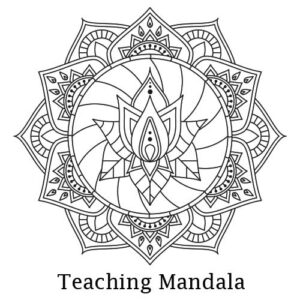
1. Teaching Mandala: Educators and spiritual leaders use teaching mandalas to illustrate philosophical principles in various contexts. Moreover, they use specific colors, shapes, and layouts to represent different lessons. So students often create these as a form of visual learning.
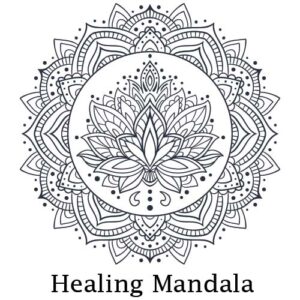
2. Healing Mandala: Artists and healers create healing mandalas to promote emotional, mental and spiritual well-being. So they are intuitive and free-flowing, often used in art therapy, meditation and for cultivating inner peace.
3. Sand Mandala: Tibetan monks create sand mandalas using colored sand as temporary art. They symbolize the universe and dismantle them after completion to represent the fleeting nature of life. the universe and are ritually dismantled after completion to represent the fleeting nature of existence—also called buddhist sand mandala destruction.
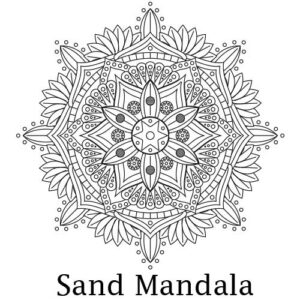
Mandalas are no longer confined to sacred or spiritual spaces. Today, mandala art is embraced for its beauty, symbolism, and calming effect:
Coloring Books – For example, many people enjoy mandala coloring books, which have gained popularity among both children and adults because they help reduce stress and promote relaxation.
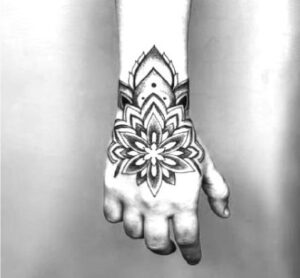
Mandala Tattoo – Many people opt for mandala tattoo designs that symbolize eternity, spirituality, or self-growth.
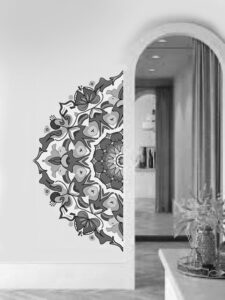
Mandala Decoration for Home – From wall hangings to cushions, mandala art is good for home decor, believed to bring peace and positive energy.
Therapy & Wellness – Art therapists use healing mandala drawing to help individuals express themselves and reduce anxiety.
You don’t have to be an artist to create a mandala! Here’s an easy mandala art tutorial perfect for beginners:
Creating a mandala is not just about the result—it’s a meditative, healing journey of creativity and self-reflection.
Want to create mandalas digitally? These user-friendly tools are perfect for exploring digital mandala art:
Mandalas are more than just art — they represent a path to mindfulness, healing, and spiritual awareness. Whether you are exploring the history of mandala art, getting a mandala tattoo, or simply seeking designs for beginners, this sacred tradition consistently offers something meaningful for everyone. Moreover, mandalas remind us that life is ever-evolving, beautiful, and deeply interconnected. Their repeating, symmetrical forms reflect both the outer universe and the inner soul.
Next time you feel stressed or lost, sit down and create a mandala — or color one. You might be surprised, for instance, by how much peace it brings. Whether you’re exploring types of mandalas and their meanings, learning how to draw one step by step, or decorating your room with a tattoo design or wall hanging, this ancient art can reconnect you with the sacred circle of life. Whether for meditation or artistic expression, exploring mandala artwork and its benefits can significantly boost your mental clarity as well as inner calm.
Grab your tools—or open a digital app—and create your very own universe, one symmetrical circle at a time.
Aliqu justo et labore at eirmod justo sea erat diam dolor diam vero kasd