Trump 50% Tariff on India | Will It Backfire on US Trade Relations?
Trump 50% Tariff on India– What’s Happening?
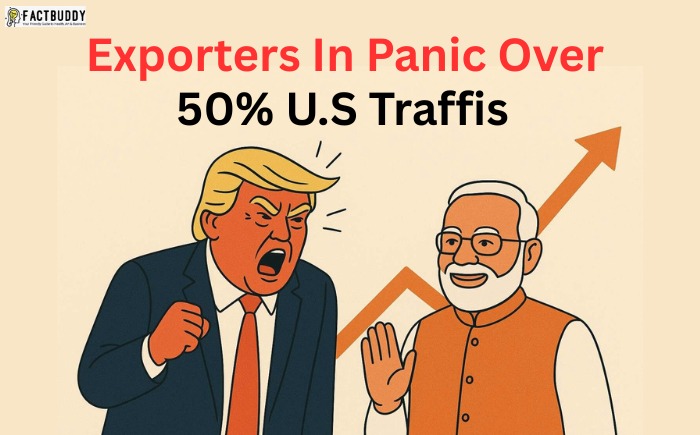
Trump 50% Tariff on India has shocked global trade as the United States suddenly imposed an additional 25% duty, pushing the total tariff on Indian goods to 50%. This decision took effect on Wednesday morning, August 27, 2025.
The most affected sectors include textiles, diamonds and jewelry, seafood (especially shrimp), leather, machinery, carpets, handicrafts, and furniture. However, pharmaceuticals, electronics, and petroleum products remain exempt from tariffs.
Why This Sudden Tariff Hike?
According to the U.S., India continues to purchase oil from Russia, thereby indirectly financing the Ukraine war. In response, Washington has imposed this 50% tariff.
Exporters’ Reactions
Last-minute shipments
Textile, jewelry, and seafood exporters rushed to dispatch shipments to the U.S. before the new tariff came into effect.
Exploring alternative markets
Many exporters are now consulting U.S.-based trade experts to reroute shipments to other countries while also targeting new markets such as China, Latin America, and the Middle East.
Passing higher costs to buyers
Especially in the shrimp export sector, exporters have clarified that they cannot absorb the additional 50% tariff themselves. The increased cost will be passed on to American buyers.
Fear of job losses
In textile hubs like Tiruppur, Noida, and Surat, production has already slowed down. With these being labor-intensive industries, there is growing fear of massive unemployment.
Demand for government support
Exporters are urging the RBI and the Central Government to provide loans, duty drawback schemes, GST waivers, and immediate relief measures to sustain operations.
Heavy Blow to Labor-Intensive Industries
According to an analysis by the Global Trade Research Initiative (GTRI), this new tariff structure will severely impact India’s labor-intensive industries. In some cases, total duties may climb as high as 60%, making Indian goods uncompetitive in the U.S. market.
The textile industry will be one of the hardest hit. For instance:
- Woven garments: tariffs rise from 13.9% to 63.9%
- Knitted garments: tariffs rise from 10.3% to 60.3%
Gems & Jewelry Sector in Crisis
India’s diamond and gold jewelry industry has received a massive blow. Earlier, the U.S. tariff on this sector was just 2.1%, but it has now skyrocketed to 52.1%.
As a result, many jewelry manufacturers are already considering shifting their production bases to the UAE or Mexico.
Collapse Looms Over India’s Furniture Industry
In 2024–25, India exported $1.1 billion worth of furniture, bedding, and mattresses to the U.S., which accounted for 45% of total exports in this sector.
Now, tariffs have increased from 2.3% to 52.3%, threatening the survival of India’s furniture export industry.
Shrimp & Seafood Exports Hit Hard
Around 32.4% of India’s shrimp exports go to the U.S. Previously, this sector enjoyed zero tariffs, but now duties have suddenly increased to 50%.
This puts Indian exporters at a major disadvantage compared to competitors like:
- Thailand (19%)
- Vietnam (20%)
- Indonesia (19%)
Trade Deal Uncertainty
India and the U.S. have already held five rounds of trade talks, with another round scheduled later this month. However, due to the Trump administration’s unilateral decisions and frequent policy shifts, doubts remain about whether these negotiations will bring any relief.
On Thursday, August 7, at the M.S. Swaminathan Centenary Conference in Delhi, Prime Minister Narendra Modi said:
“India will never compromise on farmers’ interests, even if I have to pay a personal price for it.”
This statement makes it clear that India will not bow to U.S. pressure to open its agriculture market, regardless of the ongoing trade tensions.