Trump Tariffs on India
Trump Tariffs on India!
New Delhi, August 7: US President Donald Trump has once again taken a tough step against India. America has imposed a 50% tariff on Indian products, which will be effective from August 27. Earlier, from August 7, an additional 25% tariff had already come into effect. According to the White House, this decision was taken due to India’s crude oil imports from Russia. Trump claimed that Russia is using its oil revenue to continue the Ukraine war. Therefore, India should stop buying oil from Russia. But India has made it clear that due to national interest and energy security, the oil agreement with Russia will continue.
Why this tariff?
The Trump administration claims that India’s oil imports from Russia are financially strengthening Moscow, which is fueling the Ukraine war. Trump clearly stated that in order to enforce US sanctions against Russia, such pressure on India is necessary. According to him, if India stops buying Russian oil, Putin’s war economy will weaken. However, India has firmly said that to meet its energy demand, it has long-term contracts with Russia, which cannot be broken.
Impact on Indian exports
Think tank Global Trade Research Initiative (GTRI) reported that because of this tariff, prices of Indian products in the US will rise by 40–50%. As a result, Indian exports could fall drastically. Especially sectors like textiles (60.3%), apparel (59%), carpets (52.9%), gems and jewellery (52.1%), furniture (52.3%), machinery (51.3%) and organic chemicals (54%) will suffer a severe blow.
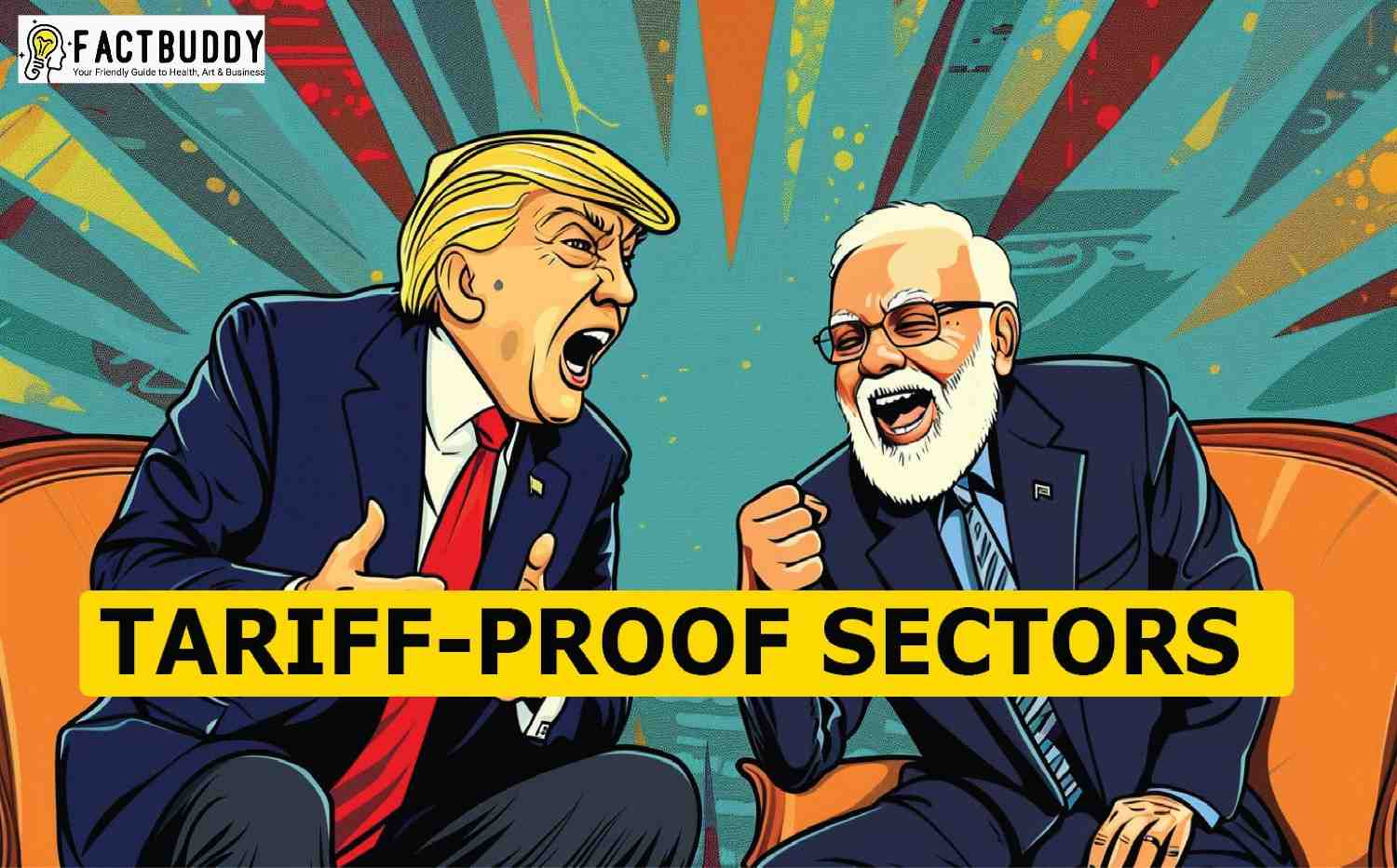
India’s $86 billion worth of exports to the US will be significantly impacted. However, crucial sectors like pharmaceuticals, energy products, natural gas, coal, electricity and semiconductors will remain exempt from the tariff.
India’s response
The Indian government has described Trump’s decision as “unfair, unreasonable and unfortunate.” In a statement, the Ministry of External Affairs said that necessary steps will be taken to safeguard India’s national interest. India is already considering challenging this tariff at the World Trade Organization (WTO dispute). At the same time, New Delhi is also looking to strengthen its strategic ties with Russia and China.
Impact on the US market
Experts believe that the tariff will affect not only India but also American consumers. Prices of Indian textiles, gems, leather, shrimps, and jewellery will rise sharply. This will reduce demand for these products in the US market. American companies may also face supply chain disruptions. Analysts say US businesses must look for alternative markets., which will be both time-consuming and costly.
India’s possible countermeasures
Within the next 21 days, there is a chance for India-US negotiations to find a solution. India may consider reducing tariffs through a bilateral deal. Apart from this, possible strategies include filing a WTO complaint, imposing counter-tariffs on US exports, or forming a new strategic alliance with Russia and China.
Which other countries face tariffs?
Trump’s tariff hike hit India and Brazil with the highest 50% rate. Additionally, Trump’s tariff hike list also includes Myanmar (40%), Thailand and Cambodia (36%), Bangladesh (35%), Indonesia (32%), China and Sri Lanka (30%), Malaysia (25%), and Vietnam and the Philippines (20%).
Conclusion:
The 50% tariff on Indian goods is undoubtedly a major challenge for India-US trade relations. India’s $86 billion exports may face a severe setback. This move could lead to an export crisis, slowdown in industries, and job losses in India, while in the US it will mean higher prices, consumer dissatisfaction, and supply chain disruptions. Clearly, this step is not just economic but also politically motivated. However, the crisis is not permanent—through smart diplomacy, diversification of export markets, and strategic cooperation, India can turn this challenge into an opportunity despite the impact of Trump Tariffs on India.