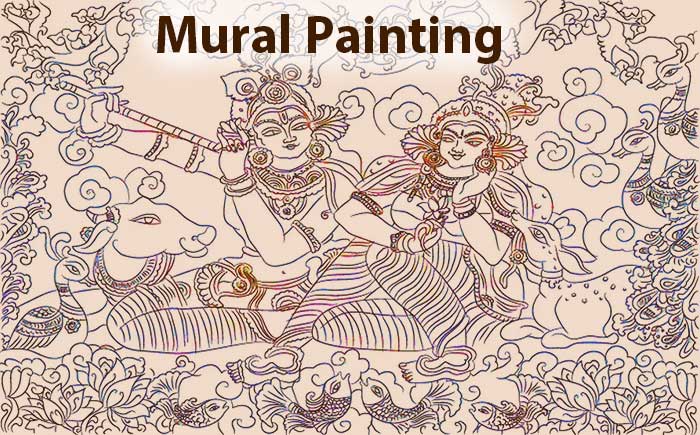
What is Mural Art Paintings
What is mural art paintings? Nowadays, we often see colorful and beautiful images on the walls of our cities—images that not only please the eyes but also convey powerful messages. In fact, these artworks, also known as murals, serve as a form of visual storytelling.
Indeed, a mural is a form of public and open art created for everyone. So it reflects the stories, history, protests, culture, and expressions of life in society. Moreover, a mural doesn’t just use colors; instead, it tells the stories of life on walls.
Moreover, most of us have probably come across mural paintings—perhaps on our daily commute, in alleys, or on the busy streets of the city. So wall mural ideas are a form of public art that transforms dull walls into vibrant, message-bearing surfaces filled with thoughts and creativity.
Across the globe, and for centuries, mural paintings have served not only as a form of beautification but also as a medium to express history, social protests, culture, and emotion.
What is Mural Art Paintings and Why is it Important?
Indeed, the word ‘mural’ comes from the Latin word ‘murus’, meaning ‘wall’. Artists create mural paintings by permanently painting images on walls. So sometimes, these artworks beautify a city; sometimes, they raise awareness; and sometimes, they become a form of protest. Furthermore, mural art is not only a beautiful expression of creativity but also tells stories of society, politics, and culture. So it is a visual art where paintings are made on large walls or other permanent surfaces.
Moreover, these images may be painted directly onto the wall or displayed using panels or digital projections. Ultimately, a mural is more than just a pretty picture—it is a powerful medium to deliver important messages to the public.
History of Mural Painting:
Indeed, The history of mural painting is thousands of years old. So traces of this art form are found in many ancient civilizations and the cave paintings of Lascaux in France and the Ajanta cave paintings in India are among the oldest known murals in the world. Moreover, inside the pyramids of ancient Egypt, murals depict gods, kings, and stories of the afterlife. In Greek and Roman civilizations, murals often featured religious and mythological themes. During the Middle Ages, churches and temples used mural paintings to depict religious stories.
Later, in the Renaissance era, mural art gained immense popularity in Europe. For example, one of the most famous mural painting examples from this time is Michelangelo’s Sistine Chapel ceiling.
Furthermore, in the late 19th and early 20th centuries, mural painting became a voice for the common people. Mexican artist Diego Rivera created murals that portrayed the lives of laborers, farmers, and social injustices. In particular, after the Mexican Revolution, murals evolved from art into tools of protest and communication.
Looking at global history, it’s clear that mural painting is not just wall decoration—it tells stories of time, society, and the human spirit. To fully understand what is mural art paintings, we must explore its origins and social impact.
Where Can We See Murals?
Mural paintings are found all over the world, including many iconic locations such as:
- The Ajanta cave paintings and religious frescoes in Kerala temples – famous examples of mural paintings in India.
- Political murals by Diego Rivera in Mexico City.
- The East Side Gallery murals on the Berlin Wall in Germany.
- Modern street art in Shoreditch, London.
These murals serve not just as decorative elements but as carriers of culture, history, and messages.
Famous Mural Artists and Their Work:
- Diego Rivera (Mexico) — Known for his murals depicting society and politics. His works highlight laborers, farmers, and everyday life.
- Michelangelo (Italy) — A Renaissance genius, renowned for the Sistine Chapel mural, one of the greatest mural painting examples in history.
- Banksy (UK) — A mysterious artist who uses graffiti-style mural painting to satirize society and politics. His works have stirred global conversations.
- James Reece (USA) — His murals reflect African-American history, culture, and social life.
Types and Characteristics of Mural Painting!
There are different types of mural painting, such as:
- Fresco Murals – Painted on wet plaster; once dry, it becomes a part of the wall.
- Mosaic Murals – Created using colored tiles, glass, or stones; very durable.
- Painted Murals – Made using brushes or rollers directly on the wall; most commonly seen.
- Marouflage Murals – Images painted on canvas and then affixed to the wall.
- Secco Murals – Painted on dry walls using brushes.
- Digital Murals – Designed on computers, printed, and pasted on walls.
- Graffiti Murals – Created using spray paint; popular in outdoor wall murals and street art.
These variations highlight the characteristics of mural painting in terms of texture, style, permanence, and technique.
Purpose and Importance of Mural Art:
Mural paintings serve various purposes. They spread social awareness—such as messages against violence or for environmental conservation. For children, educational murals often include alphabets, animals, or historical figures.
They beautify blank walls and bring joy to the public. Murals can reflect a region’s culture and history, and are often used as tools for protest and public engagement.
Process and Techniques of Mural Painting:
Before painting, a theme or message is chosen. Then a sketch is made on the wall. Artists use acrylics, watercolors, or natural pigments. Modern techniques include projections, gridding, and spray paints.
Since murals are large, tools like scaffolding or ladders are used. Many artists now create digital sketches before transferring them to walls.
Modern Murals and Technology:
Today, mural painting is more accessible thanks to technology. Artists use digital prints, stencils, photographs, or vinyl panels to quickly create murals.
Augmented reality (AR), digital projections, and interactive murals are transforming how we view and experience this art form. It has become a crucial element in smart cities.
Famous Murals Around the World!
Some globally renowned mural painting examples include:
- India: Ajanta Caves, Kalighat paintings, and mural painting Kerala temples featuring deities using fresco and secco techniques.
- Mexico: Diego Rivera’s revolutionary murals.
- Germany: The Berlin Wall’s East Side Gallery.
- Brazil: Eduardo Kobra’s “Las Etnias”.
- USA: “Detroit Industry” murals.
These reflect how murals serve as artistic and historical landmarks.
Role of Mural Painting in Modern Society:
Today, mural painting is not just about artistic expression—it is a powerful medium for raising awareness. It reflects social, political, and cultural themes, beautifies cities, boosts tourism, and uplifts mental well-being.
Now, murals are seen in schools, colleges, hospitals, and homes—where themes, emotions, and educational messages are beautifully presented.
Mural Painting in West Bengal:
Bengal has always been a hub of art and culture. Today, mural painting in West Bengal is gaining popularity.
In Kolkata and surrounding cities, murals are visible in schools, subways, sidewalks, and metro stations—spreading messages about women’s safety, education, and the environment.
Notable examples include:
- Urban beautification projects in Kolkata using murals.
- Theme-based murals around Durga Puja pandals.
- Folk-art murals in Bankura, Santiniketan, and Medinipur.
- Awareness murals on Dakshineswar Bridge and Gariahat Flyover.
These murals beautifully blend Bengal’s heritage with modern themes.
Buying Murals and Modern Technology:
Traditionally, murals were painted directly on walls. Today, many artists create murals on canvas or readymade panels, making them easier to purchase and install.
Digital murals, AR murals, and projection-based murals are also gaining traction.
Mural Painting Price / Mural Cost
The mural painting price depends on the size and complexity of the design.
- Small murals: ₹5,000 and up
- Medium murals: ₹15,000–₹50,000
- Large or intricate murals: ₹50,000+
Some artists charge ₹150 to ₹800 per square foot.
Digitally printed murals are usually cheaper, while hand-painted murals are more expensive.
Conclusion:
So, what is mural art paintings? It’s a timeless expression of community, creativity, and storytelling on walls. Mural painting is not just a colorful image—it is an expression of society, history, and human thought. Every wall mural tells a story that touches not only the eyes but also the heart.
In today’s world, mural art doesn’t just decorate—it spreads awareness and preserves culture. With the touch of technology, this art form has become more dynamic, interactive, and accessible. So these silent artworks have become a powerful force for positive change in society.