
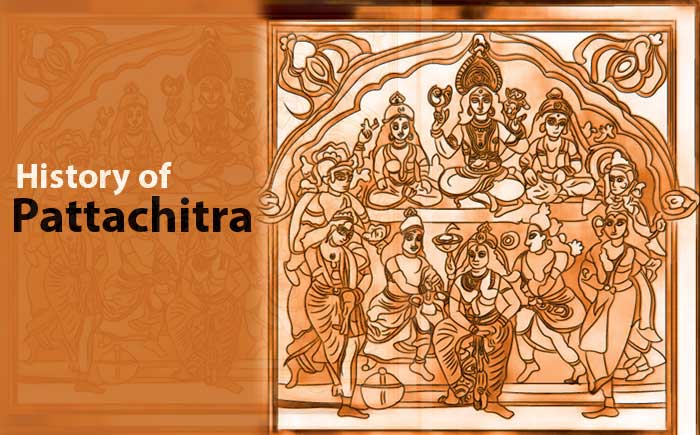
Indeed, pattachitra painting is one of the oldest and most celebrated traditional art forms of India, Moreover, known for its intricate details, mythological themes and vibrant colors. So originating from Odisha and West Bengal, this unique style of painting has been practiced for centuries, reflecting the rich cultural heritage of the region. The word “Pattachitra” comes from the Sanskrit words Patta (cloth) and Chitra (picture), meaning “painting on cloth.”
Historically, Pattachitra paintings were created to depict stories of Hindu deities, especially Lord Jagannath, Krishna, and episodes from the Ramayana and Mahabharata. Moreover, these paintings are characterized by bold outlines, natural colors, and elaborate borders, making each piece a timeless work of art.
Over the years, the craft has evolved while still preserving its traditional essence. Today, Pattachitra is not just a cultural treasure but also a thriving art form sought after by collectors and art lovers worldwide. So in this guide, we’ll explore what Pattachitra painting is, its origin, distinctive features, and why it remains an enduring symbol of India’s artistic legacy.
Pattachitra is a mesmerizing and ancient art form rooted in the soil of Bengal. If you’re wondering what is Pattachitra painting, it’s more than just brush and color it’s a magical storytelling art expressed through lines, music, and human imagination.
Indeed the word Pata means cloth, derived from the Sanskrit word Patta. Pattachitra refers to a form of traditional folk painting in Bengal, drawn on cloth or paper. It is an essential part of Bengal’s rich cultural heritage. In ancient times, before court-sponsored painting traditions developed in Bengal, people recognized pattachitra painting as the region’s primary artistic expression.
Historians and art experts trace the roots of Pattachitra art to the ancient artistic traditions of Eastern India, especially Odisha and Bengal. In Bengal, this art began to flourish around the 7th and 8th centuries.
The 7th-century text ‘Harshacharita’ by Banabhatta mentions a Patua (folk artist) explaining Pattachitra to children. Similarly, the 8th-century Sanskrit play ‘Mudrarakshasa’ by Vishakhadatta also references Patas and Patuas. Kalidasa’s plays, such as Abhijnanasakuntalam, Malavikagnimitram, and Bhaktivilasa by Bhattadeva, also mention Pattachitra painting. Artists of Jagannath Pattachitra turned it into one of the earliest living traditions of Indian art.
Though Pattachitra has ancient roots, the organized form of Pattachitra painting in Odisha began around the 12th century. Since then, the art has closely linked itself with the religious culture of the Jagannath Temple in Puri.
The heritage village Raghurajpur in Odisha stands as the heartland of Pattachitra painting, where artists have passed down the tradition through generations. Although the origin is in Odisha, Pattachitra painting West Bengal—especially in districts like Medinipur—has its own distinct popularity and practice.
Pattachitra evolved as a traditional art form in the rural regions of Bengal. People know these artists as Patuas. This folk art is not just visual—it is narrative. Every Pattachitra painting tells a story reflecting religion, folklore, society, and culture. This ancient art still survives in the hands of Patuas who have been continuing the practice for generations.
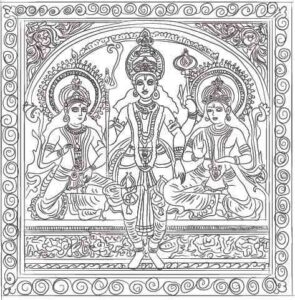
These are long scroll paintings, generally between 15 to 30 feet in length and 2 to 3 feet wide. They narrate entire stories through sequential panels.
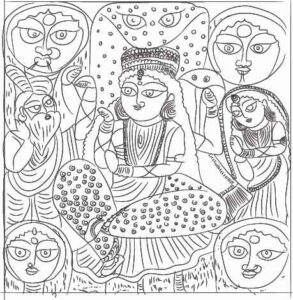
These are smaller, square-shaped paintings that are easy to carry. While drawing, the Patuas also sing narrative songs called Poter Gaan, making it a blend of visual and performing art.
The base is prepared using cloth coated with a mixture of clay, cow dung, and natural glue. Once it dries, the painting begins with handmade brushes.
Typical colors used include red, blue, yellow, pink, brown, white, and black.
Brushes are handmade by fixing animal hair or bird feathers to bamboo sticks, allowing detailed and fine painting.
Pattachitra painting beautifully captures both Hindu and Muslim traditions. Through simple lines and images, Patuas express deep spiritual, cultural, and emotional stories. From the 8th century, Buddhist monks began using scroll paintings called Moskeri Pot to depict the Jataka tales of Buddha. Over time, Hinduism became the dominant theme.
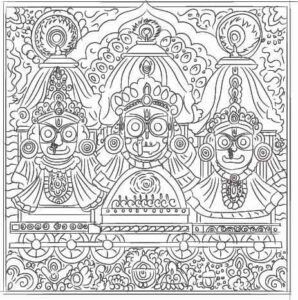
A notable theme in Hindu Pattachitra art is the depiction of Vaishnav deities, especially Jagannath Pattachitra. Other recurring divine figures include Durga, Kali, Manasa, Annapurna, Lakshmi, Yama, Chandi, the Dashavataras (ten avatars), etc.
Common themes include episodes from Ramayana and Mahabharata—like Rama’s exile, Sita’s abduction, Ravana’s defeat, Krishna Leela, Manasamangal, Chandimangal, and Chaitanya Mahaprabhu’s life stories.
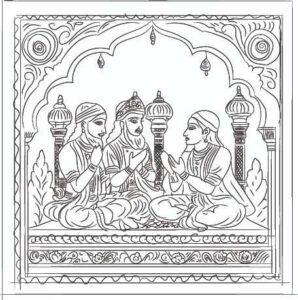
The most well-known is Gazi’s Pata. These paintings illustrate the mystical stories of Gazi Kalu and Champabati or the miraculous deeds of Gazi Pir. Gazi is often shown riding a tiger, wielding a sword or holding a flag.
Other popular Muslim themes include depictions of Manik Pir, Madar Pir, Satya Pir, and Bonbibi’s tales.
A renowned Patua from Munshiganj, Bangladesh, was Sudhir Acharya.
Different villages of West Bengal, particularly Pingla and Naya in the Medinipur district, are famous for Pattachitra Bengal style. The art form is also practiced in Kolkata, Birbhum, Jhargram, Bardhaman, and Murshidabad, where Artists combine songs and paintings as a living folk tradition.
Pingla in West Medinipur is a recognized hub of Pattachitra Medinipur Pingla. Around 255 Patua artists live here. Artist Chitrakar Bahadur established a unique Pattachitra Museum, showcasing rare and ancient Pattachitras, manuscripts, foreign coins, and stamps, drawing both art and history enthusiasts.
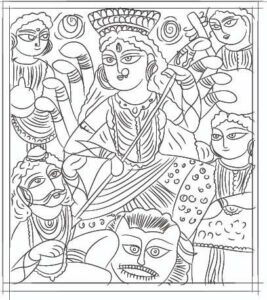
Near Kolkata’s Kalighat Temple, colorful Kalighat Patachitra are sold, portraying Hindu deities, mythological stories, and daily life scenes. Pilgrims often buy these as souvenirs. This form inspired Jamini Roy Kalighat painting style and is known for bold lines and vibrant colors. Other prominent artists include Nandalal Bose, Sanatan Dinda, Kali Prasad Ghosh, and Harinarayan Chattopadhyay.
Pattachitra is a living canvas where color and song together narrate history, belief, society, and culture. It is not just art—it is a rhythm of life.
However, with rapid urbanization, this folk art is gradually fading. Many artisans are shifting to other professions for better income. As a result, the interest in Pattachitra painting is slowly declining, although once it was an inseparable part of rural life
Aliqu justo et labore at eirmod justo sea erat diam dolor diam vero kasd