White Eggs vs Brown Eggs: Which is Healthier and More Nutritious?
In markets and supermarkets, you can now find eggs of various colors—shiny white eggs in some places, and dark reddish or light brown eggs in others. Seeing this variety, many buyers wonder: does the color difference affect the egg’s quality? Some believe that brown eggs are authentic “desi” eggs and more nutritious, while others think white eggs are purer and easier to digest. But what is actually true? Understanding the science behind these common perceptions may change many people’s views.
The Mystery Behind Egg Color
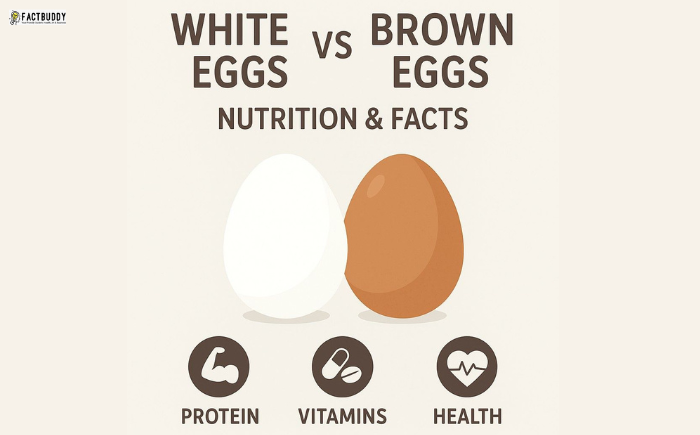
Experts say that the color of an eggshell mainly depends on the breed and genetic makeup of the hen. Generally, hens with lighter feathers and white earlobes lay white eggs, while hens with darker feathers or reddish earlobes produce brown or reddish eggs. This is a completely natural biological process and has no direct correlation with the egg’s nutritional value or quality.
So judging an egg’s quality based on its color is entirely a misconception—rather, the farm environment and the care given to the hens play a major role in determining nutritional value.
Nutrition Depends on Diet and Care, Not Color
The nutritional quality of an egg primarily depends on the hen’s diet, environment, and rearing methods. If hens are fed a balanced and natural diet and raised in a chemical- and antibiotic-free environment, their eggs are highly nutritious—whether white or brown. Sometimes, brown eggs may appear slightly larger due to the hen’s breed and diet. However, a larger size or weight does not necessarily mean more nutrition—this is completely false.
What Does an Egg Contain?
A medium-sized egg typically contains about 6–7 grams of protein and around 5 grams of healthy fat. It also includes essential vitamins such as B12, D, A, and E, which are vital for various body functions. Additionally, eggs are rich in minerals like calcium, phosphorus, selenium, and iron, which support bone, muscle, and brain health. Studies have shown that the nutritional content is nearly the same in both white and brown eggs.
How Many Eggs Are Safe to Eat?
Doctors and nutritionists recommend that healthy adults can eat one or two eggs per day. Those with cholesterol issues should limit whole eggs to three to four per week, consuming only egg whites for the rest. Daily egg eaters may benefit more from the whites, as yolks contain higher fat content, which can contribute to weight gain. Consuming eggs along with a balanced diet and regular physical activity enhances nutritional intake. Experts consider eggs a good alternative source of protein that can be included regularly in the diet.
What to Look for When Buying Eggs
When buying eggs, focus on freshness and quality rather than color. Sometimes, eggs that have been stored for long periods lose their nutritional value. A simple way to check freshness is to place eggs in a bowl of water—fresh eggs sink, while old or spoiled eggs float. Organic or free-range eggs are preferable because they are produced in chemical- and antibiotic-free environments.
Expert Analysis
Experts emphasize that you cannot judge an egg’s nutrition by its shell color. What truly matters is freshness and how the egg has been stored. The production environment is also crucial—eggs from free-range, chemical-free farms are more nutritious. So, when buying eggs, focus on freshness, production methods, and storage conditions rather than color. Selecting eggs this way ensures they are healthy and nutritious.
Final Words:
Judge by quality, not color. Whether white or brown, eggs are a complete food. They are excellent sources of protein, vitamins, and minerals for the body. The truly beneficial egg is the fresh and pure one. So, next time you buy eggs, choose based on quality, not color.